
Chocolate
Month
A vibrant, month-long celebration
Where Love, History, and Cocoa Meet
At first, it feels like a love story. A young man walks carefully, his steps calculated, his pocket heavy with something precious. Beads of sweat gather on his brow, not from fear, but from determination.
In the distance, a woman waits, perhaps for a proposal, perhaps for a promise.
Valentine’s Day is near, after all.
But what he carries is not a ring.
It is a seed.
And that seed would change Ghana forever.
The Seed That Became The Nation’s Love Language
In 1879, a young Ghanaian blacksmith, Tetteh Quarshie, returned from Fernando Po (now Bioko Island, Equatorial Guinea) with cocoa pods, introducing cocoa to the Gold Coast for the first time. This simple act of bringing home seeds would grow into a significant symbol of pride and prosperity for Ghana.
The journey of cocoa in Ghana began long before Quarshie’s return, as European colonists and missionaries had already introduced cocoa to West Africa in the early 1800s. By 1815, Dutch missionaries started planting cocoa along the coast, but it was Quarshie’s efforts that catalyzed cocoa farming on a larger scale.
Upon his return, Quarshie planted Amelonado cocoa pods in Akuapim-Mampong, establishing the country’s first successful cocoa plantation. His farm became a source of opportunity, providing seedlings for other farmers. Cocoa cultivation rapidly expanded, with Ghana emerging as one of the world’s leading cocoa producers by the early 1900s.
Quarshie’s influence is commemorated through national memorials, including the Tetteh Quarshie Memorial Hospital, and in the Tetteh Quarshie Cocoa Farm, where some original trees still grow. His story illustrates how a simple journey and a handful of seeds laid the foundation for Ghana’s cocoa heritage and chocolate culture.
Over time, cocoa evolved beyond just an agricultural product; it became an integral part of the nation’s identity, nurturing farmers and families for generations and solidifying its legacy in Ghanaian culture.
Chocolate, Love and Memory
Today, chocolate is universally associated with love gifted, shared, savoured. In Ghana, that symbolism runs deeper. Chocolate carries the memory of labour, patience, and care. It tells the story of farmers who waited through seasons, tended trees for years before harvest, and trusted that what they planted would one day bear fruit.
It is no coincidence, then, that Ghana’s celebration of chocolate aligns with Valentine’s Day.
Chocolate is love, but in our case, love that has been cultivated.
From a Day to a Week: The Evolution of Chocolate Week
The National Chocolate Day was instituted in 2005, deliberately placed on 14th February, to encourage the domestic consumption of Ghanaian chocolate and cocoa-based products while offering a local expression of love.
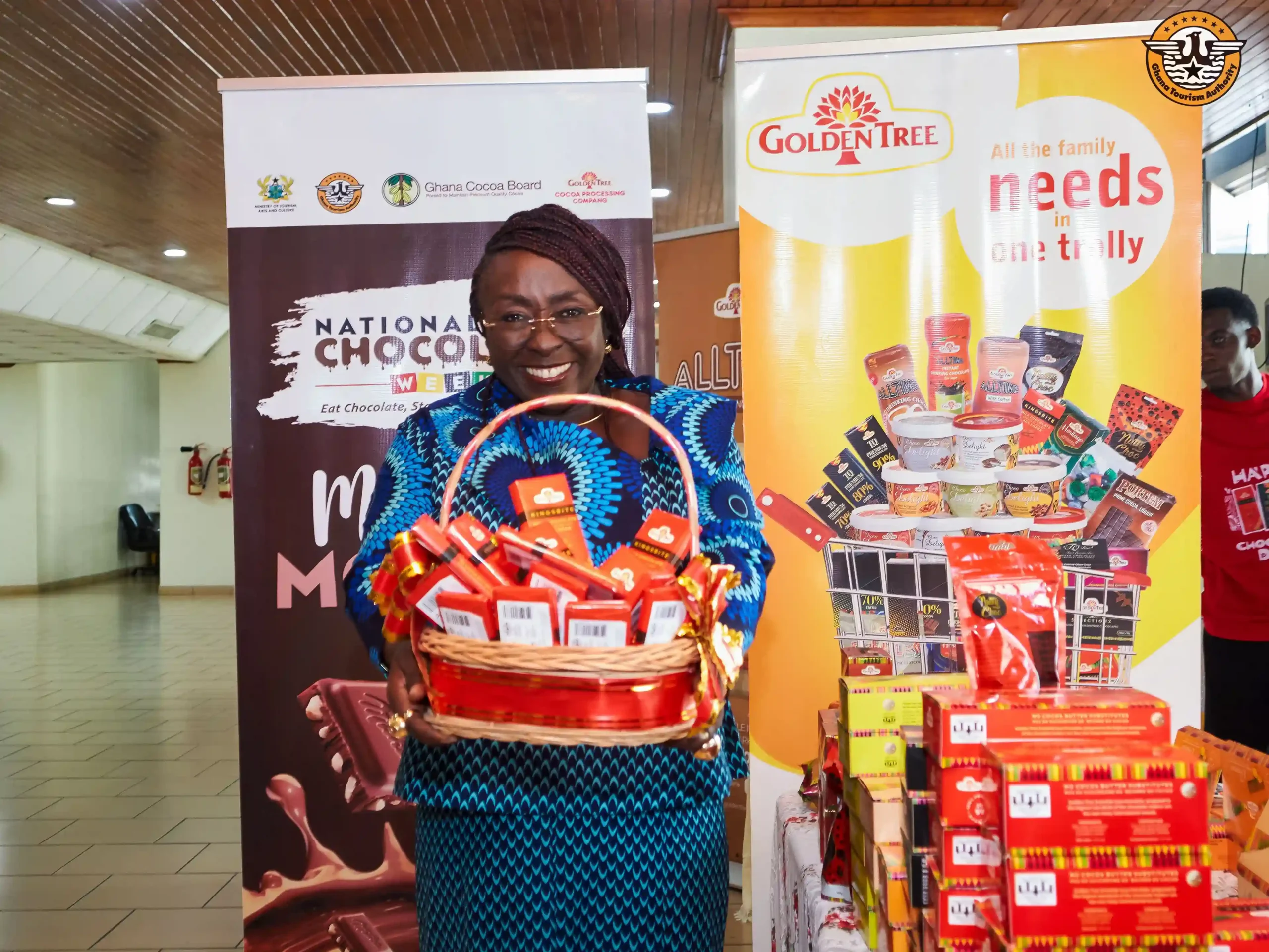
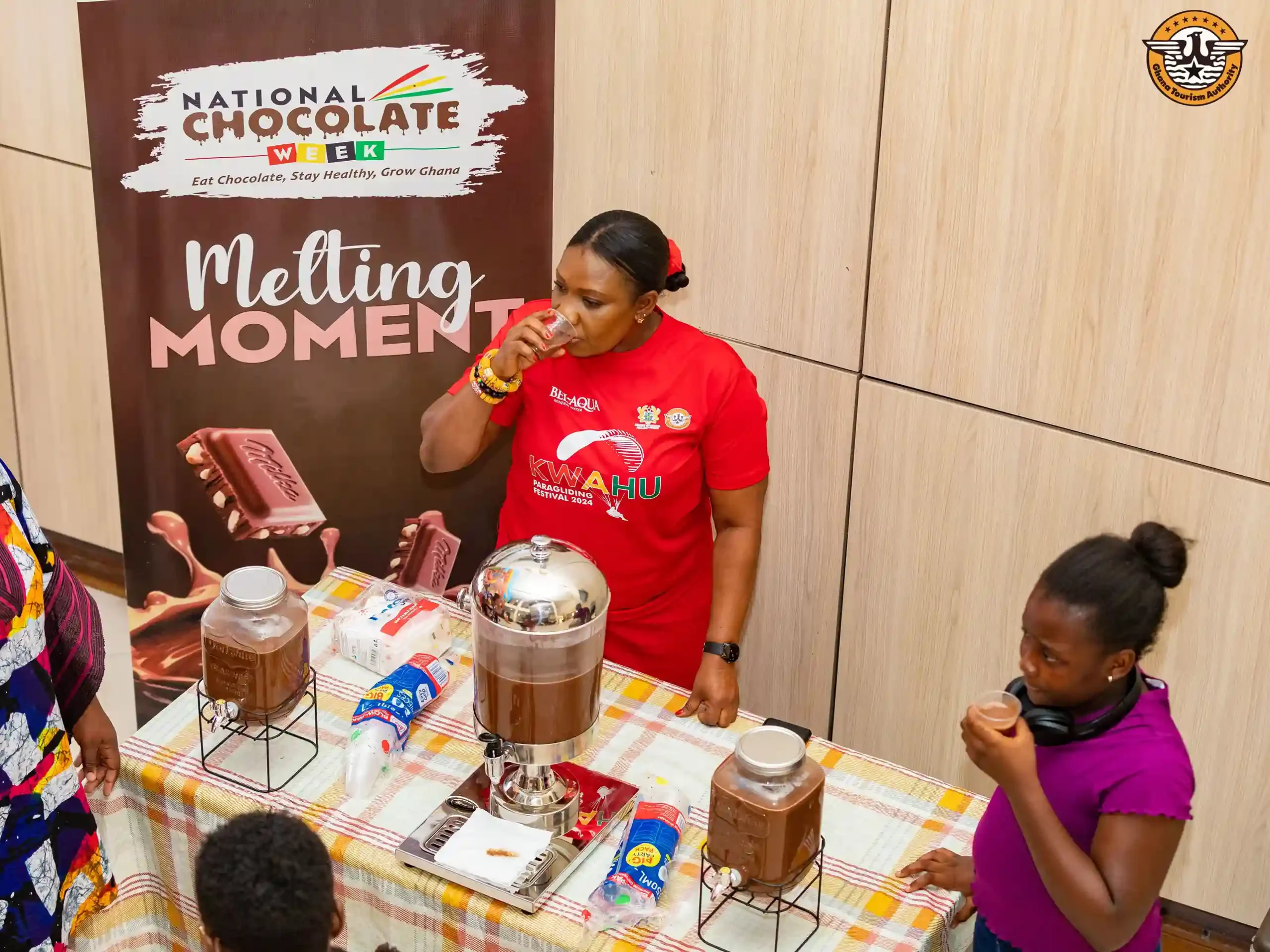
In 2021, recognizing the growing cultural and economic importance of cocoa, the Ghana Tourism Authority (GTA), in collaboration with COCOBOD and the Cocoa Processing Company, expanded the celebration into a week-long national experience now known as National Chocolate Week.
Since then, Chocolate Week has become an annual celebration not just of taste, but of identity.
What Chocolate Week Represents
National Chocolate Week is an annual cultural and tourism celebration that:
1. Promotes the consumption of Ghanaian chocolate and cocoa-based products
2. Highlights the health and nutritional benefits of chocolate
3. Honours cocoa farmers as custodians of a national treasure
4. Connects Ghana’s cocoa heritage to modern expressions of love, wellness, and creativity