

Origins: Remembering Victory and Rebirth
Before the drums are heard and the streets of Akuapem come alive, Odwira begins quietly with reflection, cleansing, and remembrance. Celebrated annually by the Akuapem people in Ghana’s Eastern Region, Odwira is more than a festival; it is a living expression of heritage, gratitude, and renewal that invites visitors to witness how people reconnect with their past while preparing for the future.
Held between September and October, Odwira marks the purification of the state, the honouring of ancestors, and the celebration of the year’s harvest. Over time, it has grown into one of Ghana’s most culturally significant festivals, drawing chiefs, indigenes, cultural enthusiasts, and visitors from across the world.
At its core, Odwira is about:
- Spiritual purification — cleansing communities, ancestral stools, and hearts
- Ancestral homage — honouring past generations for protection and guidance
- Thanksgiving — celebrating the harvest and bounty of the land
- Unity and reconciliation — bringing people together in reflection and joy
The festival preserves age-old traditions that stand as living bonds between ancestors and descendants, creating continuity between past and present for future generations.
A Festival Rooted in History and Identity
The origins of Odwira trace back to the 19th century, following the Akuapem people’s victory over invading forces and their subsequent desire to spiritually cleanse the land. What began as a ritual of purification evolved into an annual observance that reinforces unity, leadership, and cultural continuity.
The Odwira Festival is one of Ghana’s most revered traditional celebrations — a cultural phenomenon that invites reflection, thanksgiving, community unity, and spiritual renewal. Rooted in centuries of tradition, Odwira is celebrated predominantly by the Akuapem people of the Eastern Region—especially in Akropong, Kuapem, Aburi, Larteh, and Mamfe— and has grown into an event of national cultural significance.
Nana Addo Dankwa I, the 19th Okuapimhene of Akropong, instituted Odwira, an Akan word meaning “purification,” in 1826. The festival was first celebrated after the historic Battle of Katamansu near Dodowa, in which the people of Okuapemman triumphed over a powerful army.
This victory symbolised unity, resilience, and the deep-seated belief that spiritual renewal and communal strength are intertwined. Odwira is therefore much more than a celebration; it is a ritual of cleansing, remembrance, and thanksgiving.
Traditionally, Odwira falls during the harvest season (September–October), when abundant food, especially yams, is available and gratitude for community sustenance is expressed.
What Visitors Will Experience
Rituals of Renewal
The festival opens with solemn purification rites cleansing the stools, sacred spaces, and the land itself. These rituals symbolize letting go of the past year’s burdens and welcoming a new season with clarity and hope.
Odwira unfolds as a carefully structured and deeply symbolic series of days, each with its own meaning and purpose.
Pre-Festival — Six Weeks of Reflection
For approximately six weeks before the festival, the community observes a ban on:
- Loud music and drumming
- Noise-making after dark
- Funerals
- Eating yams
This period of meditation and restraint prepares hearts and minds for purification and thanksgiving ahead.
Monday — Clearing the Ancestral Paths
The festival officially begins with royal rituals. Members of the royal families ceremonially clear the sacred paths from the town to the royal mausoleum (Ammamprobi), symbolically inviting the spirit of ancestors (Nananom) to join the celebrations.
Tuesday — Lifting the Yam Ban
On Tuesday, the yam ban is lifted, inaugurating a season of feasting and joy. Representatives of the traditional stool houses present the new yam harvest to the Paramount Chief and ancestors in a procession that blends drama, music, and laughter.
Wednesday — Day of Mourning and Respect
Mid-week, the community shifts tone. Dressed in symbolic red and black, families visit relatives and mourn departed loved ones, reaffirming that heritage includes grief and remembrance.
Thursday & Friday — Homage and Durbar
Chiefs, queen mothers, and dignitaries pay homage to the Paramount Chief (Okuapehene) in elaborate regalia. The festival’s grand durbar of chiefs brings together royalty, community leaders, and visitors to showcase culture, unity, and leadership.
Weekend Celebrations — Community Unity
Saturday and Sunday mark a relaxed extension of the festivities, with local games, sports, social gatherings, and a special durbar hosted by the ‘Krontihene’ that concludes the festival in a spirit of community and reflection.
Processions and Durbar of Chiefs
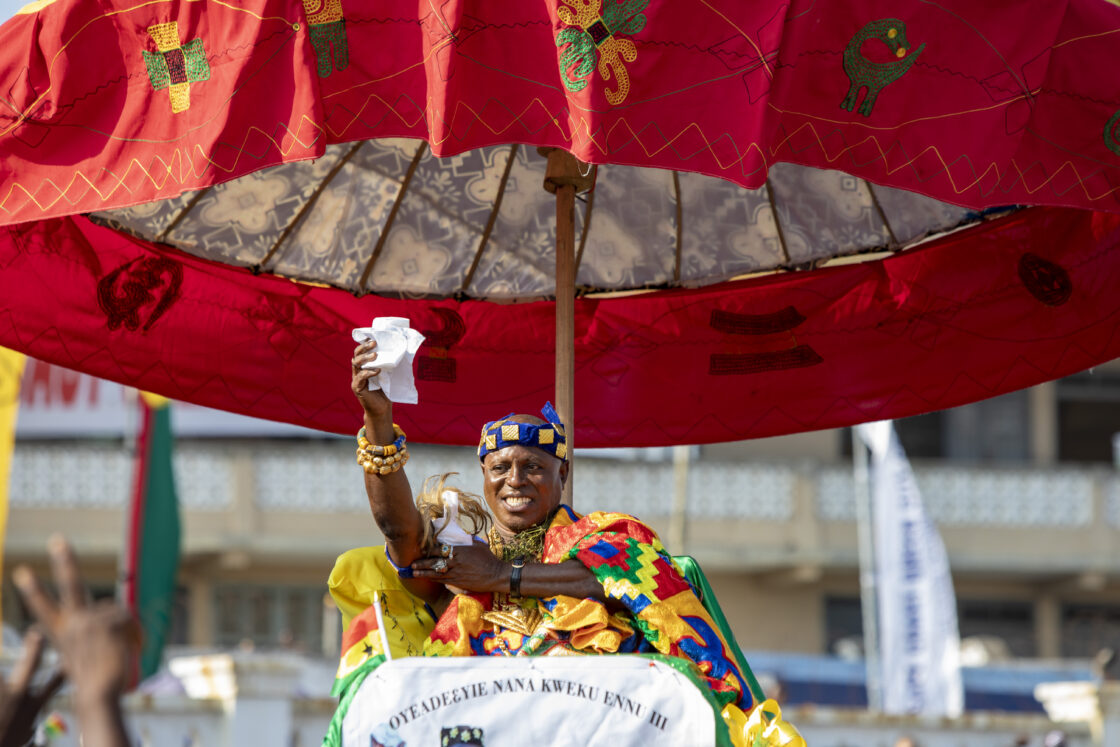
One of the most visually captivating moments of Odwira is the grand durbar. Chiefs adorned in regal kente, gold ornaments, and traditional insignia arrive in the state, accompanied by drummers, dancers, and praise singers. The atmosphere is rich with symbolism, colours, and pride.
Harvest and Thanksgiving
Odwira coincides with the harvest season, making it a celebration of abundance. Traditional foods made from newly harvested crops are prepared and shared, reinforcing values of gratitude and communal living.
Music, Dance, and Storytelling
From fontomfrom drums to kete and Adowa dances, Odwira is a sensory experience. Every rhythm and movement tells a story — of migration, resilience, leadership, and faith.
Odwira and Modern Ghana
While deeply traditional, Odwira has adapted gracefully to modern Ghana. Today, it also serves as the following:
- A cultural homecoming for Akuapem indigenes in the diaspora
- A platform for youth cultural education
- A driver of local tourism and economic activity
Hotels, local artisans, food vendors, tour operators, and cultural performers all benefit from the influx of visitors during the festival period, making Odwira an important contributor to the local economy.
The festival also creates space for dialogue between tradition and Christianity, reflecting how cultural identity continues to evolve while remaining grounded in heritage.
Plan Your Visit
Akropong-Akuapem and nearby towns in the Eastern Region primarily celebrate the Odwira Festival. Visitors are encouraged to plan ahead, respect local customs, and engage with approved tour guides to enhance their experience.
Whether you come for the spectacle, the history, or the spirit of renewal, Odwira welcomes you into a story that has been told for generations and continues to be lived today.