

About Homowo
A Journey from Famine to Feast — Ghana’s Most Joyful Heritage Celebration
Have you ever wondered what it means for a people to mock hunger?
Not with arrogance, but with memory.
Not with excess, but with survival.
To laugh at the very thing that once stalked their children, emptied their barns, and tested their faith and to do so not once, but every year, so it is never forgotten.
This is Homowo.
For the Ga people of the Greater Accra Region, that act of defiance became a festival that celebrates resilience, community, and gratitude.
One of Ghana’s most vibrant and significant cultural celebrations is Homowo, which literally translates as “hooting at hunger.” It honors a pivotal time in Ga history when the village was in danger of a severe famine, but it was eventually followed by a bountiful harvest. Today, Homowo welcomes tourists from all around Ghana and the world as a joyful celebration of life, unity, and hope as well as a place of cultural remembering.
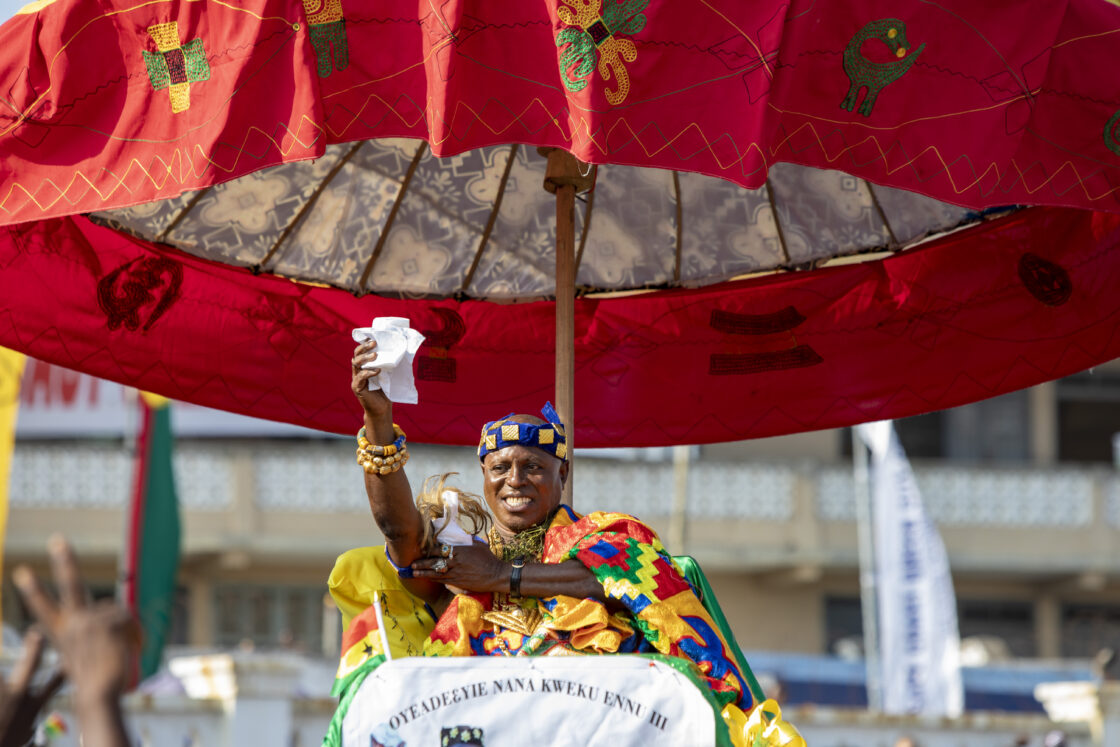
Homowo starts out quietly before the drums come back and the streets of Accra come alive with dance and melody.
Celebrated annually between August and September by the Ga people of Ghana’s Greater Accra Region, Homowo commemorates a time of famine endured during migration, and the courage it took to plant, wait, and hope anyway. Today, it stands as one of Ghana’s most profound heritage festivals a living reminder of resilience, accountability, and renewal.
Origins: A Festival Born on the Road
The Kwa-speaking peoples of West Africa include the Ga people, who are part of the Ga-Dangme group. Their history is one of migration rather than permanency, as is the case with many African societies. Before settling along Ghana’s coast, migrants passed across portions of West and Central Africa, according to oral traditions.
The Ga people experienced extreme hunger during one of these migrations. There wasn’t much food. The situation was unclear. However, they cultivated the land, fished the sea, and offered libations to ancestral spirits and Ataa-Naa Nyonmo, the Supreme Being, rather of giving in to hunger.
The people did more than just eat when the rains came and the harvest arrived. They made fun of hunger.
Why Homowo Is Celebrated in Phases Across Accra?
Homowo does not occur in a single location or on a single day. Nungua, Osu, La, Teshi, Tema, and Gamashie are among the autonomous traditional regions that comprise the Ga State. Each of these regions has its own governmental authority, clans, and ceremonial calendar. Homowo ceremonies are purposefully spaced out because people may be related to more than one place.
People are able to relocate, go back home, and fully engage as a result. Since Nungua is thought to be one of the oldest Ga villages, it customarily celebrates first. Teshi, one of the newest towns, concludes the Homowo season.
The Sacred Silence Before the Celebration
Weeks before Homowo, a ban on drumming and noise known as gbemlilaa (“locking the way”) is imposed. This silence is not punishment rather it is preparation.
The ban allows communities to focus on farming, reflection, and discipline. It aligns with the Ga people’s deep respect for nature, including sacred days dedicated to the earth and the sea, when farming or fishing is prohibited.
In a modern city, this quiet period stands out a reminder that celebration must be earned.
Cultural Practices: When History Unfolds in Ritual
Homowo is not a single day. It is a season of memory, stretching across months from silence to sound, from hunger to abundance. Each act happens in time, and each one tells a story.
The Ban on Drumming and Noise
When: Traditionally May to August
Homowo begins with silence.
Every year, usually around May, the Ga Traditional Council imposes a ban on drumming and noise-making across Ga communities. No loud music. No public drumming. The city slows down.
Centuries ago, during the Ga people’s migration and early settlement along the coast, a devastating famine struck. Crops failed. Hunger lingered. Many lives were lost. In that period, noise and disorder were believed to worsen spiritual imbalance. The ancestors chose restraint. Silence became survival.
As weeks pass in quiet, the community collectively reenacts that discipline. The silence is not emptiness; it is waiting. For visitors, this phase reveals Homowo’s depth: celebration is earned, not rushed.
Gbemlilaa – The First Harvest Ritual
When: Late August
As the rains ease and crops mature, the first maize is harvested in a sacred ritual known as gbemlilaa.
After seasons of hunger, the first successful harvest marked a turning point in Ga history. But before anyone celebrated, the ancestors paused. They offered thanks, acknowledging that survival had not come by human strength alone. No public festivity followed yet. Gratitude came first.
This moment is quiet but powerful. It is the breath before joy. The land has responded. Hunger has loosened its grip.
Kpokpoi Preparation
When: Early September
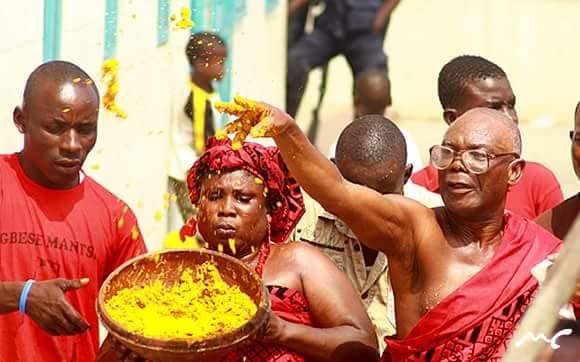
Homes begin preparing kpokpoi — steamed maize mixed with palm oil.
Maize, once scarce, became the symbol of victory over famine. Turning it into kpokpoi was an act of transformation: hunger into nourishment, fear into provision. Families prepared it not just for eating, but for sharing with neighbors, elders, and spirits.
Kpashimo – Sprinkling the Food
When: September to October (varies by traditional area)
This is the most visible ritual of Homowo.
Chiefs and elders move through the community sprinkling kpokpoi in public spaces.
In ancient times, this act was deliberate mockery. Hunger had tormented the people; now it was being laughed at, shamed, and defeated. Sprinkling food was a declaration: we survived you.
Lifting the Ban & Public Celebration
When: After Kpashimo
Only after Kpashimo is completed does drumming return.
Music erupts. Dancing follows. Processions fill the streets. Once hunger was overcome, joy could finally be expressed without restraint. Sound returned because survival was secure.
When the drums begin, they carry months of silence and centuries of memory. Homowo becomes visible but its meaning has already been lived.
By laughing at faults, the community clears the path for better conduct in the year ahead.
Today, Homowo serves multiple roles:
- A cultural homecoming for Ga indigenes across the diaspora
- A platform for intergenerational education
- A major cultural tourism attraction within Accra
Visitors are drawn not only to the food and festivities, but to the philosophy behind them a worldview that values restraint before celebration, memory before excess, and truth before comfort.
Visiting Homowo: What to Know
Visitors are welcome to experience Homowo, but are encouraged to:
- Respect the ban on drumming periods
- Dress modestly during ritual moments
- Seek guidance from local hosts or tour operators
- Observe before participating
Homowo is not staged for audiences. It is lived by communities.
Why Homowo Matters to Ghana’s Story
Homowo’s story starts with adversity. According to Ga oral tradition, the Ga experienced a severe famine during their early arrival in what is now Greater Accra due to food scarcity and failing rains. Following the direction of their ancestors, the group cultivated crops and observed a time of introspection and solemn stillness while they awaited food. The villagers cheered when the crops blossomed, and the rains returned. A promise to never forget hunger and to bravely and gratefully celebrate its passage arose from that victory.
This act of rejoicing celebrating abundance after scarcity is the spirit of Homowo. It is not simply a festival, but a living testament to resilience. Homowo reminds us that Ghana’s heritage is not only found in monuments, but in memory.
It tells a story of people who faced hunger and chose courage. Who laughed not because life was easy but because they endured.