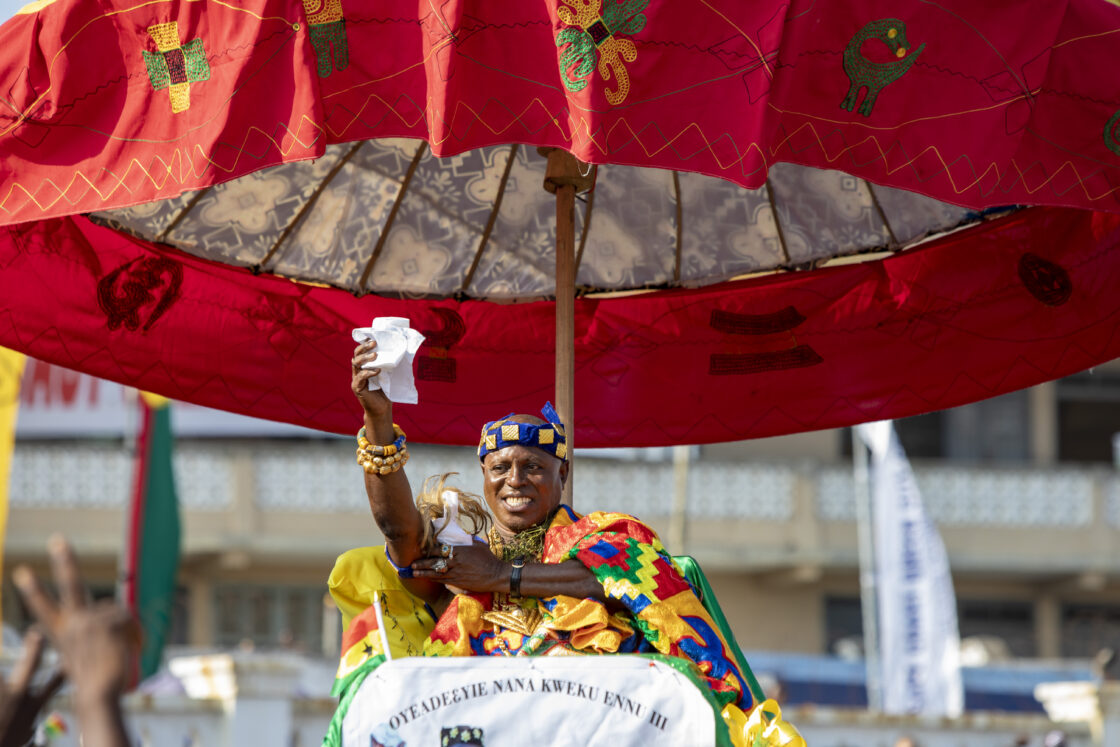

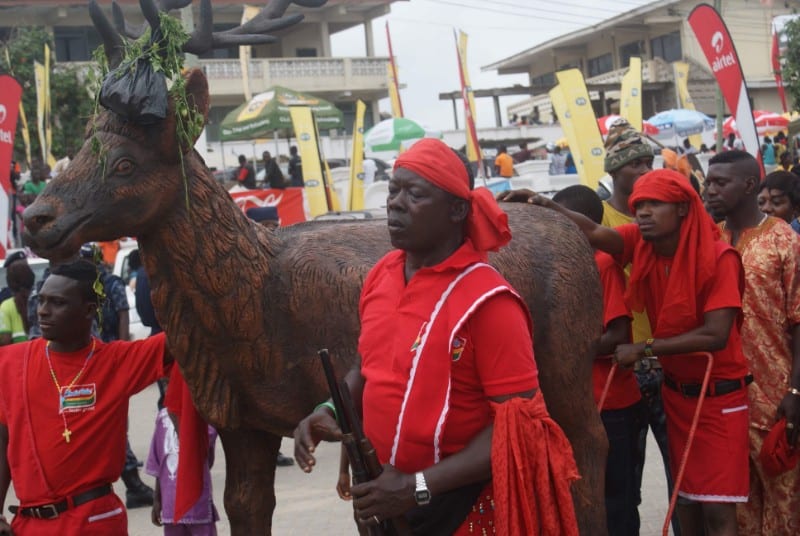
The most attractive aspects of Ghanaian cultural life are those of the colourful traditional festivals and durbars which are frequently held in all parts of the country.
Festivals reveal some common features. During these festivals, the people remember their past leaders and pray for help and protection. Festivals are also held in order to purify the whole state so that the people can enter the New Year with confidence and hope.
Fetu Afahye is being celebrated by the people of the Oguaa, or Cape Coast Traditional Area, in the Central Region and is named after the 17th-century Fetu, or Effutu, kingdom, which is located 19 kilometres inland of Cape Coast. This festival starts on the 1st of September every year. A feature of this festival is the state purification rites, which include the paramount chief’s yam festival, and is observed in the form of offering mashed yams to the gods.
The festival is very colourful, and it’s like a grand festival. There is a procession of chiefs, drumming, dancing and firing of musketry, but this is unique in the traditional attire of the various warrior groups and the slaughtering of a cow in public for the 77 gods of Oguaa (Cape Coast).
There is also a display of traditional priests and priestesses on Monday night, which attracts a large crowd, mainly the youth, and thousands of people, including foreigners from all over the country, travel to witness the festival. This festival has the effect of creating in the people a feeling of pride in their cultural heritage and spiritual affinity.
During this occasion, it also gives people the opportunity to meet old friends and relatives they’ve missed for a long time.
But there is another significant feature: the ceremony “Bakatue” involves cutting through the sandbar separating the Fosu Lagoon and the sea to allow the lagoon access into the sea, presumably to bring more fish into the lagoon.
The Omanhene (Paramount Chief), as part of the event, pours libation to the deity, Nana Fosu. The Omanhene’s net is cast three times into the lagoon to signify the lifting of the ban on lagoon fishing.
Various fishermen’s groups in the municipality organize a regatta or board race on the lagoon. A grand Durbar climaxes the festival.
The post Fetu Afahye appeared first on Visit Ghana.